Key takeaways
- Binance.US shows missing cost basis when it doesn't know what you originally paid for your crypto, most often because you transferred the crypto in, moved it out during the platform's wind-down, or hold assets that are non-covered on your Form 1099-DA.
- Left uncorrected, the IRS treats missing cost basis as $0, which turns your entire sale into a taxable gain and can massively overstate your tax bill.
- You are allowed to report your own cost basis, even when the Binance.US tax report or your Form 1099-DA leaves it blank, as long as you have records to back it up.
What does missing cost basis mean on Binance.US?
Your cost basis is what you originally paid for your crypto, including fees. It's the number Binance.US subtracts from your sale price to calculate your gain or loss.
When that number is missing, Binance.US doesn't know what you paid, so it can't calculate your real gain.
You'll usually spot the problem in one of a few places: the tax report you generate in the Binance.US Tax Center, the estimated gains and losses in the Binance Tax tool, or your Form 1099-DA. In each one, the cost basis field shows up blank, as "unknown," or as "$0."
Remember, a missing cost basis is a records problem, not a tax you actually owe. The crypto still has a real purchase price. Binance.US just doesn't have it on file.
Why is my cost basis missing on Binance.US?
Binance.US can only track what you paid if you bought the crypto directly on Binance.US and still hold it there. Anything else can leave the cost basis blank. Binance.US also has a history that makes this more common than on other exchanges. Here are the reasons it happens.
Assets you were forced to withdraw during the Binance.US wind-down
This cause is specific to Binance.US.
In 2023, the SEC sued Binance and Binance.US, and Binance reached a settlement with the Department of Justice and the CFTC. In the aftermath, Binance.US lost its US dollar banking rails, delisted assets, and paused parts of its service, and many users moved their crypto off the platform to self-custody wallets or other exchanges.
When crypto leaves Binance.US, the purchase history stays behind. The coins arrive at the destination wallet or exchange with no cost basis attached, while the record of what you paid is stranded on Binance.US.
That's the trap: you sell somewhere else later, but the number you need to prove your basis lives on an account you may have already wound down.
Degraded historical data and incomplete exports
Since those restrictions, pulling a complete transaction history out of Binance.US has gotten harder.
The Binance Tax tool and the API and CSV exports it relies on often miss matching purchase records, fiat deposits, or one side of a transfer. When an export is incomplete, the cost basis comes back blank even for crypto you bought and held on the platform.
You transferred crypto into Binance.US
If you bought crypto on another exchange or in a self-custody wallet and then transferred it to Binance.US, Binance.US never saw the original purchase. It knows the coins arrived, but not what you paid for them.
When you later sell, Binance.US has proceeds but no cost basis to subtract.
Your assets are non-covered on Form 1099-DA
Starting with the 2025 tax year, Binance.US issues Form 1099-DA to report your crypto sales.
For the 2025 tax year, exchanges report your proceeds only, not your cost basis. Any crypto you bought before January 1, 2026, or transferred in from another platform, is treated as a non-covered asset, which means Binance.US has no obligation to track or report its cost basis. On these, the cost basis field is blank by design.
For a deeper look at the form itself, check out our guide to the Binance.US Form 1099-DA.
What happens if you file with $0 cost basis?
This is the part that scares people, and it's worth understanding clearly.
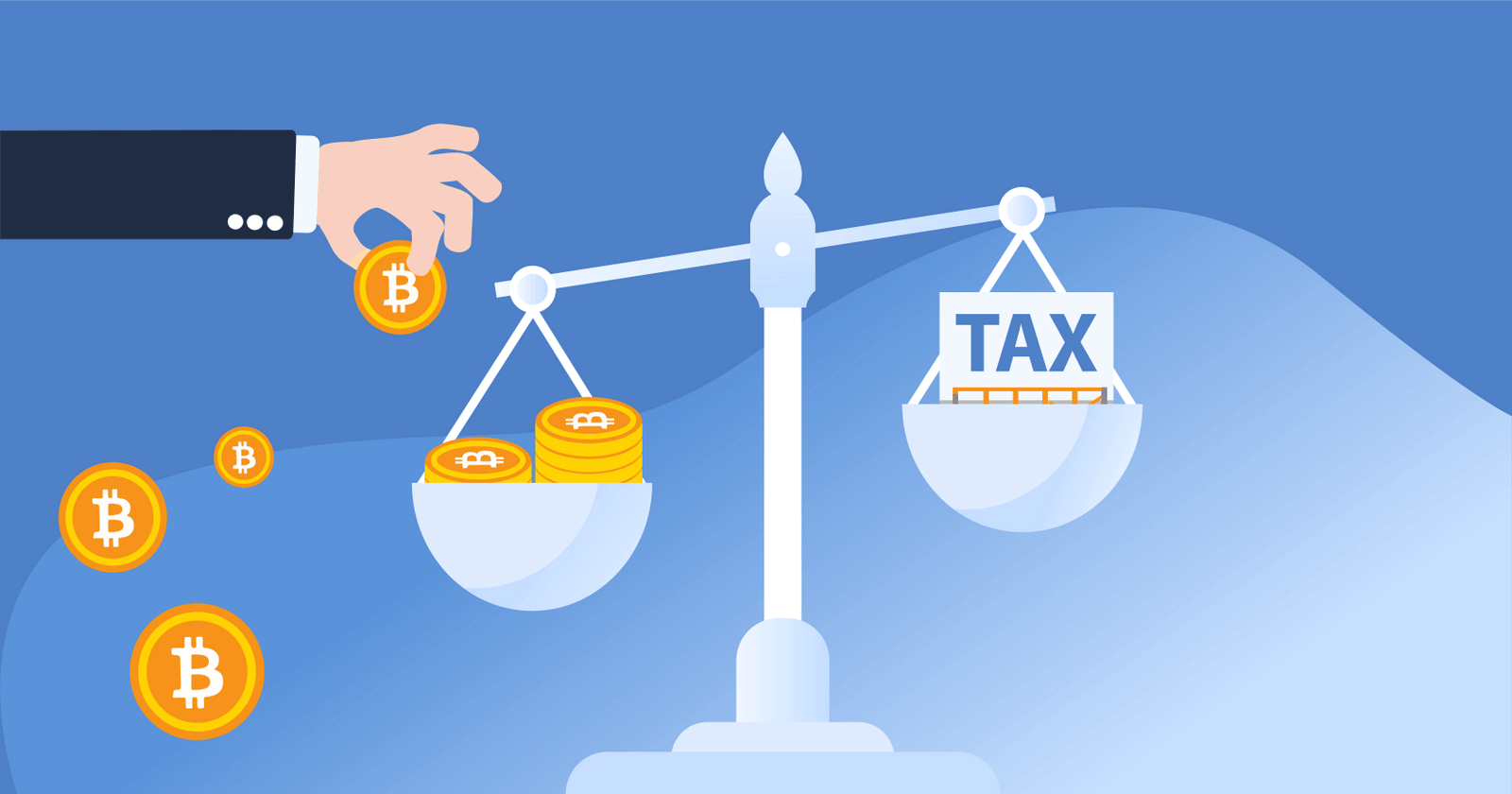
If cost basis is missing, the IRS treats it as $0. That means your entire sale price is counted as profit, even if you barely made any money.
Ryan's actual gain is $2,500, not $4,000. His cost basis was $1,500, it just wasn't recorded at the exchange where he sold.
If he files straight from the $0 figure, he pays tax on an extra $1,500 he never earned.

Luckily, there's an easy fix. You are allowed to report your own cost basis, as long as you have documentation to support it.
How to fix missing cost basis on Binance.US
You have a few options, from the platform's own tools to a complete fix across all of your accounts.
Generate your Binance.US tax report
The Binance.US Tax Center lets you generate a tax report and use the Binance Tax tool to pull your activity by API or CSV.
This works fine when your history is simple and all of your buying and selling happened on Binance.US.
However, it has real limits. Since the platform's restrictions, historical data access is degraded, so these exports frequently come back incomplete, missing purchase records, fiat deposits, or one side of a transfer. And like any exchange, Binance.US can't see the crypto you bought or moved on other platforms. If you were forced to withdraw assets, the tool can't rebuild a basis it never had.
Track down your original records
Your true cost basis lives wherever you first bought or acquired the crypto.
That means digging up the buy records from Binance.US itself, plus any wallet or exchange you were forced to withdraw to, and any platform you bought on before transferring in. Match each transfer to the sale it eventually became, and calculate the gain by hand.
This is doable for a few transactions. It becomes a real project once your crypto has moved across several platforms, which is exactly what the Binance.US wind-down forced many users to do.
Import everything into CoinLedger
The cleanest fix is to bring your full history back together in one place.
Crypto tax software like CoinLedger connects to Binance.US and hundreds of other exchanges and wallets, then imports your complete transaction history by API or CSV. Because it sees every platform, it can match the crypto you withdrew off Binance.US back to its original purchase, so your cost basis carries across the withdrawal instead of resetting to $0.
Its reconciliation system flags missing cost basis and other errors before you file, so you can fix them in one pass instead of hunting through transactions one at a time. This is the wedge past Binance.US's incomplete native exports.
How to report the correct cost basis on your taxes
Here's the reassuring part: a blank cost basis on Binance.US or on your 1099-DA does not lock you into overpaying.
Under IRS rules, you report your capital gains and losses on Form 8949. You're allowed to use your own cost basis figures there, as long as you have documentation to support them.
You don't need to request a corrected Form 1099-DA. Because exchanges aren't required to report cost basis for non-covered assets, a blank field isn't an error to dispute, it's a number you're expected to supply yourself.
Remember, the IRS cares most about complete reporting. Report all of your activity with accurate cost basis, keep your records, and a blank field on the Binance.US version is a non-issue.
The per-wallet cost basis rule
One recent change matters here.
Starting January 1, 2025, the IRS requires you to track cost basis on a per-wallet basis (under Revenue Procedure 2024-28), instead of pooling every account together. Each wallet and exchange account keeps its own set of cost basis records.
That makes the Binance.US problem more visible, not less. When you were forced to move crypto off Binance.US, its cost basis has to follow it correctly to the account where you eventually sell. Importing every source into one place is what makes that possible.
Get started with CoinLedger
A missing cost basis on Binance.US almost always comes down to the same thing: your crypto has a history that's stranded on an account Binance.US can no longer show you in full. Pull that history back together, and the problem disappears.
CoinLedger connects to Binance.US and hundreds of other exchanges and wallets, matches your transfers, and rebuilds your cost basis across every account, so you can file with accurate numbers instead of a $0 placeholder.
CoinLedger is trusted by more than 700,000 investors around the world.
Frequently asked questions
- What do I do if my cost basis is missing on Binance.US?


- Why does my Binance.US Form 1099-DA show $0 or blank cost basis?
- How do I get my Binance.US tax report or transaction history?
- Does Binance.US report to the IRS?
- Is Binance.US allowed in the USA?
- Do I have to report crypto if my profit is under $600?
- Can I still fix my cost basis after I've filed?


.png)
How we reviewed this article
All CoinLedger articles go through a rigorous review process before publication. Learn more about the CoinLedger Editorial Process.
.png)

CoinLedger has strict sourcing guidelines for our content. Our content is based on direct interviews with tax experts, guidance from tax agencies, and articles from reputable news outlets.