9 Best Crypto Exchanges in Canada (2026)
.jpg)



Key takeaways
- Registration tier is the dimension that separates Canadian platforms. NDAX, Shakepay, Wealthsimple, Newton and Bitbuy's operator are CIRO Investment Dealers; Coinbase, Kraken, Crypto.com and Netcoins are Restricted Dealers.
- Robinhood bought Bitbuy's parent company, WonderFi, on June 1, 2026. Canadian accounts are migrating, and coins Robinhood does not support are being sold rather than moved.
- NDAX charges a flat 0.20% per trade with no volume tiers, the simplest low-cost pricing on this list. Newton's 1.00% to 1.60% spread is the most expensive.
- Compare Canadian dollar rails in both directions. Free Interac deposits are common; withdrawal fees and spreads are where the money actually goes.
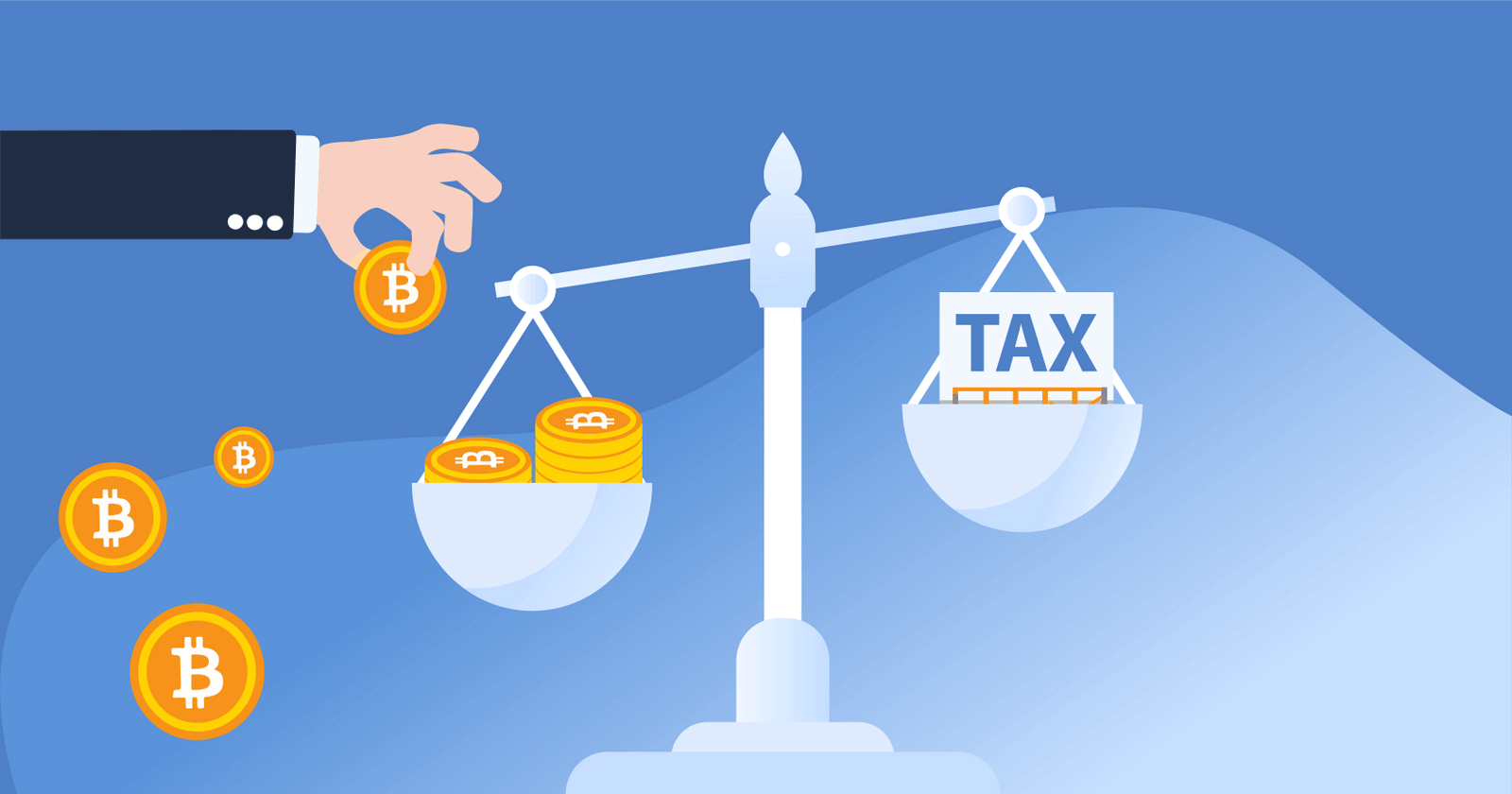
- The CRA treats every disposal as a taxable event, including crypto-to-crypto trades, with capital gains included in income at 50%.
In this guide, we’ll break down the 9 best cryptocurrency exchanges in Canada on the dimensions that actually separate them here: how each platform is registered with the Canadian Securities Administrators, how you fund an account in Canadian dollars, fees, and how many cryptocurrencies you can actually buy. By the time you’re finished, you’ll know which platform fits the way you invest, and what the CRA expects from you once you start trading.
Quick look: the 9 best cryptocurrency exchanges in Canada

Bitbuy
Fees: 0.5% on Bitbuy Pro (Bitbuy Express can be higher)
Registration: Accounts are held and operated by Coinsquare Capital Markets Ltd., a CIRO Investment Dealer registered with the OSC, with CIPF coverage on cash balances up to $1 million per account.
CAD funding: Deposits and trading in Canadian dollars. Check Bitbuy’s current funding page for deposit and withdrawal fees, which are changing as accounts move across to Robinhood.



Coinbase
Fees: Simple buys carry a spread on the price plus a separate fee that varies with your payment method, order size and market conditions. Coinbase Advanced uses volume-tiered maker/taker pricing.
Registration: Coinbase Canada, Inc. is a CSA-authorized Restricted Dealer in all 13 provinces and territories and a FINTRAC-registered money services business. It is not a CIRO member, so there is no CIPF coverage.
CAD funding: Interac e-Transfer and EFT top-ups are free for Canadian users. Interac funds your Canadian dollar balance first; you then place the trade.

Kraken
Fees: 0% to 0.40% maker and 0.05% to 0.80% taker on Kraken Pro
Registration: Payward Canada Inc., operating as Kraken, is a Restricted Dealer with the securities regulators in every province and territory and a FINTRAC-registered money services business (M19343731). It is not a CIRO member.
CAD funding: Kraken supports Canadian dollar deposits by Interac e-Transfer. Deposit and withdrawal fees change, so check Kraken’s CAD funding page before you move money.

Wealthsimple
Fees: A flat 0.5% plus a spread from September 24, 2026. Until then the schedule is tiered: 2.0% on Core, 1.0% on Premium and 0.5% on Generation. Limit orders are spread-free, and orders under $100 carry a $1 surcharge.
Registration: Wealthsimple Investments Inc. is a CIRO Investment Dealer. Its crypto holdings are not protected by CIPF or CDIC, even though cash and securities held there are.
CAD funding: Funded in Canadian dollars from a linked Canadian bank account, in the same app as your stocks.

NDAX
Fees: A flat 0.20% on every trade, with no volume tiers and no maker/taker split.
Registration: Ndax Canada Inc. is a CIRO Investment Dealer and a FINTRAC-registered money services business, and was the first Canadian crypto exchange to earn SOC 2 Type II certification.
CAD funding: Interac e-Transfer, bank wire and crypto deposits are free. Canadian dollar withdrawals cost $1.50 by Interac e-Transfer and $4.99 by EFT.

Crypto.com
Fees: 0% to 0.5%
Registration: Foris DAX CAN ULC, which operates Crypto.com in Canada, obtained restricted dealer registration in every province and territory on May 8, 2025, and was the first platform to sign a pre-registration undertaking with the CSA in August 2022.
CAD funding: Canadian dollar funding is supported in-app. Check Crypto.com’s current fee schedule for deposit and withdrawal costs before you fund.
Newton
Fees: Newton charges a spread rather than a commission, tiered by asset: 1.00% to 1.15% on Bitcoin, Ethereum and USDC, 1.25% to 1.45% on Litecoin, Solana and Stellar, and 1.50% to 1.60% on everything else.
Registration: Newton Crypto Ltd. has been a CIRO Investment Dealer since March 18, 2026, which brings CIPF coverage, and is registered with FINTRAC.
CAD funding: Canadian dollar deposits and withdrawals are supported. Check Newton’s current funding page for limits and fees.
Shakepay
Fees: No trading commission. Shakepay earns its revenue from the bid-ask spread, so compare the price you are quoted rather than a headline rate.
Registration: Shakepay Inc. has been a CIRO Investment Dealer since January 8, 2025, and is a FINTRAC-registered money services business.
CAD funding: Canadian dollar deposits and withdrawals are free, and so are crypto withdrawals.
Netcoins
Fees: Netcoins publishes a current fee schedule on its own site. Check it before you fund, because what you pay depends on the asset and on how you trade.
Registration: Netcoins Inc. is registered as a Restricted Dealer with the CSA, and says it is completing a CIRO membership application.
CAD funding: Canadian dollar funding is supported. Check the current deposit and withdrawal fees on Netcoins’ own funding page.
Funding a Canadian account: Interac e-Transfer, EFT and wires
Every platform on this list takes Canadian dollars, so the real question is not whether you can fund an account but what it costs to get money in and back out again. Three rails do almost all the work in Canada.
- Interac e-Transfer: The fastest option and the default for most Canadians. Coinbase and NDAX both accept Interac e-Transfer deposits for free, and Shakepay charges nothing on deposits or withdrawals. NDAX charges $1.50 to send Canadian dollars back out by Interac.
- EFT, or electronic funds transfer: Slower, and usually the cheaper choice for larger amounts. NDAX charges $4.99 for an EFT withdrawal, and Coinbase does not charge for EFT top-ups.
- Bank wire: Worth it only for large transfers. NDAX accepts wire deposits for free, while most platforms charge for outgoing wires.
Two things catch people out. An Interac deposit funds your Canadian dollar balance, it does not buy the crypto, so you still have to place the trade afterwards. And the deposit is rarely where the cost sits: the withdrawal fee and the trading spread usually matter far more than getting money in. Check the current fee page on any platform you are considering, because these numbers change more often than a roundup like this one can track.
How to choose a cryptocurrency exchange in Canada
The best cryptocurrency exchange for you may vary depending on your unique situation.
Before you get started with a cryptocurrency exchange, ask yourself what you’re looking for in an exchange. Here are some factors to consider:
- Registration tier: This is the Canada-specific question. A CIRO Investment Dealer, such as NDAX, Shakepay, Wealthsimple or Bitbuy’s operator, sits under the strongest regime available to a crypto platform here. A Restricted Dealer, such as Coinbase, Kraken, Crypto.com or Netcoins, is registered but held to a lighter standard. Anything that is not on the CSA’s list is not registered to serve you at all.
- CIPF coverage: Protection from the Canadian Investor Protection Fund applies to cash at CIRO member firms, not to your crypto. Read what a platform says is actually covered rather than assuming the logo covers your coins.
- Canadian dollar funding: Compare Interac e-Transfer, EFT and wire fees in both directions. A free deposit paired with an expensive withdrawal is not a cheap platform.
- Fees: Look at the all-in cost rather than the headline rate. A flat commission, a spread, and a commission-free quote can come to very different numbers on the same trade.
- What happens if it is acquired: Canadian platforms consolidate. Bitbuy is being folded into Robinhood, and coins the acquirer does not support are sold rather than moved. Ask what would happen to your holdings if the platform changed hands.
- Custody and security: Check whether the platform holds your crypto, how much of it sits in cold storage, and whether two-factor authentication is enforced.
Will my exchange shut down?
It is a fair question in this market. Canada’s registration regime pushed several large global platforms out, and the domestic ones are consolidating.
Four global exchanges left rather than register, and none has come back:
- OKX: Announced its exit in March 2023 and stopped serving Canadians that month, calling the move temporary. It has not returned.
- Binance: Withdrew from the Canadian market in May 2023, citing the CSA restrictions introduced that February.
- Bybit: Pulled out of the registration process in May 2023 and told Canadian users their positions would be liquidated if they did not withdraw. Canada is still an excluded jurisdiction in its service agreement.
- Gemini: Announced its departure in October 2024 and closed all Canadian accounts on December 31, 2024.
The bigger story in 2026 is consolidation rather than exit. Robinhood closed a C$250 million all-cash acquisition of WonderFi, the parent of Bitbuy and Coinsquare, on June 1, 2026, bringing roughly 300,000 funded accounts and more than C$2.1 billion in assets under custody. Accounts are still held by Coinsquare Capital Markets Ltd., a CIRO Investment Dealer, and customers are being invited onto the Robinhood app at a flat 0.5% fee per Canadian dollar trade.
The mechanics matter if you hold coins there. Once an account is flagged for migration it goes into read-only mode, so you can log in but cannot trade, deposit or withdraw. Coins that Robinhood does not support are delisted and sold, with the proceeds carried across as cash. A forced sale is still a disposal, so it is a taxable event whether or not you chose it.
Decentralized exchanges and Canada
Some critics claim that centralized exchanges (such as those listed above) are not aligned with the transparent and decentralized ethos of cryptocurrency. After all, these exchanges are owned by large companies who have the power to censor transactions and ban users.
Because of this, many investors opt to use decentralized exchanges. Decentralized exchanges allow users to provide their own liquidity to the platform and make trades without a centralized provider acting as a middleman.
Uniswap, Curve and 1inch are the best known. None of them is registered with the CSA, because there is no company to register: they are protocols rather than platforms.
That has three consequences for a Canadian investor. You cannot fund a decentralized exchange with Canadian dollars, so you need to buy on a registered platform first and then move the crypto across. There is no customer support and no CIPF coverage, so a mistake is yours to absorb. And the CRA still treats every swap as a disposal, even though no Canadian dollars change hands, so a year of active trading on a decentralized exchange can produce a long list of taxable events with no annual statement to reconcile them against.
How is crypto taxed in Canada?
Whichever platform you choose, the CRA treats cryptocurrency as a commodity rather than as money. That makes disposing of it a taxable event, and a disposal is broader than most people expect: selling for Canadian dollars, trading one cryptocurrency for another, and spending crypto on goods or services all count.
How the gain is taxed depends on whether the CRA sees your activity as investing or as a business.
- Capital gains: If you are investing, half of your gain is included in your income and taxed at your marginal rate. The proposed increase to a two-thirds inclusion rate was cancelled in March 2025 and never became law.
- Business income: If your activity looks like a business, the whole gain is included. The CRA weighs the badges of trade: how often you transact, how long you hold, what your intention was, and whether the activity is carried on in a commercial way. Frequent day trading and mining at scale push in this direction.
For the full picture, see our guide to crypto taxes in Canada, the current Canadian crypto tax rates, and how to claim crypto losses.
Get your Canadian crypto taxes done in minutes
The hard part is not the rate, it is the record keeping. Your cost basis has to follow your coins across every platform you have ever used, and it breaks the moment you transfer between them, which is exactly what happens when a platform is acquired and your holdings are moved or sold for you.
CoinLedger connects to Bitbuy, Coinbase, Kraken, NDAX, Newton, Shakepay, Netcoins and hundreds of other exchanges and wallets, reconciles your cost basis across all of them, and produces a report you can file yourself or hand to your accountant.
More than 700,000 investors use CoinLedger to file their crypto taxes. Get started with a free preview report, and you only pay when you download your completed forms.
Frequently asked questions
- How do I trade crypto in Canada?


- What crypto exchange is registered in Canada?
- Which crypto exchanges have left Canada?
- What happened to Bitbuy?
- What is the best crypto exchange for day trading?
- Which Canadian exchange went bust?
- Do I have to pay tax on crypto in Canada?




.png)