.jpg)


Key takeaways
- Binance.com is still off-limits to US residents, even after its November 2023 $4.3 billion settlement with the Department of Justice.
- There’s no clear-cut way to regain access to a locked Binance.com account, but you may still be able to claim an investment theft loss on your taxes if you can show there’s no reasonable prospect of recovering your funds.
- If your account was closed, Binance’s Closed Account Service lets you download your transaction history yourself, no support ticket required.
In 2020, Binance shut off access to all accounts based in the United States due to pressure from regulators. Unfortunately, this move caused thousands of Americans to lose access to their Binance accounts, and by extension, their cryptocurrency holdings.
Why did Binance shut down in the United States?
Binance was banned in the United States because it did not comply with U.S. laws and regulations. Exchanges that trade virtual currency derivatives are required to register with the CFTC, which Binance did not do.
In November 2023, Binance pleaded guilty to federal charges and agreed to pay more than $4.3 billion to resolve the Department of Justice’s investigation. Binance’s founder, Changpeng Zhao (“CZ”), personally pleaded guilty and resigned as CEO. Richard Teng, who previously led Binance’s regional markets, took over as CEO.
Can I still open a Binance account in the United States?
While Binance.com is no longer allowed to operate in the United States, Binance.US can still be used by Americans. The exchange has a similar user interface, but offers fewer cryptocurrencies and is compliant with U.S. regulations.
Binance.US is a separate, US-compliant company from Binance.com. It suspended USD deposits and withdrawals in June 2023 after its banking partners pulled back amid regulatory pressure, then fully restored USD banking on February 19, 2025. The SEC’s lawsuit against Binance, Binance.US, and CZ was also dismissed with prejudice in May 2025. Binance.US remains a legitimate, currently operating option for US residents, separate from the still-blocked Binance.com.
How do I regain access to my Binance account?
At this point, it’s difficult to regain access to an American-based Binance.com account, which means some investors have permanently lost their assets.
Your transaction history is a separate story. If your account was closed rather than just locked, Binance’s Closed Account Service lets you verify the email or phone number on the old account and download a report of your transaction history, no support ticket required. It won’t restore your funds, but it can save your tax filing.
Unfortunately, signing up for a Binance.US account does not give users access to assets that were held in a Binance.com account.
Can I claim my lost Binance assets as a capital loss?
The IRS doesn’t allow a personal casualty loss deduction here. The 2025 One Big Beautiful Bill Act made permanent the Tax Cuts and Jobs Act’s elimination of personal casualty and theft loss deductions outside a federally or state-declared disaster area, and a Binance account freeze doesn’t qualify.
Luckily, there’s a different path that may work: an investment theft loss deduction under IRC Section 165(c)(2). In March 2025, the IRS Office of Chief Counsel confirmed that this deduction requires you to show both a genuine profit motive for holding the cryptocurrency and no reasonable prospect of recovering it at the time you claim the loss.
If you find yourself in this situation, reach out to a tax professional who can help you document your case and file it correctly. For more information, check out our complete guide to reporting stolen or lost cryptocurrency.
What do I do if I was transferred some of my assets into and out of my Binance account in the past?
Some investors run into trouble if they transferred assets into and out of Binance and other accounts they’ve lost access to. Consider the following scenario.
Example: Roger’s transferred assets
Roger transfers 2 BTC into his Binance.com account.
Later, he transfers 1 BTC out to a personal wallet, keeping 1 BTC on the exchange.
Binance then locks Roger out of his account.
Without his transaction history, Roger can’t establish which BTC came from which source, or the cost basis for either one.
.jpg)
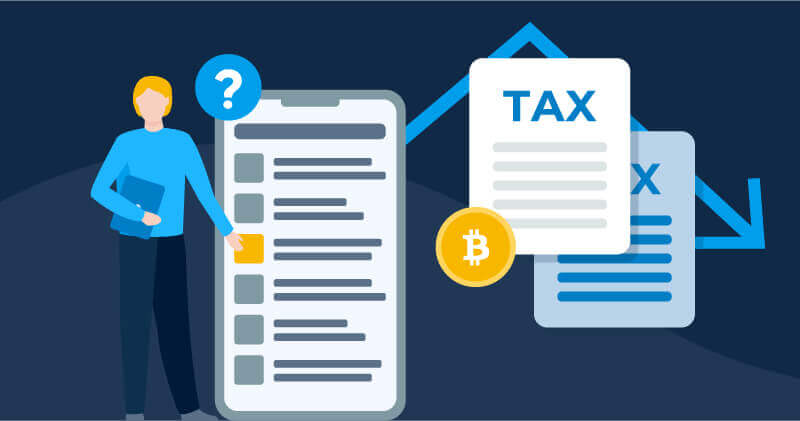
If Roger is locked out of his account, he may not be able to get his transaction history back, which he needs to accurately report his taxes.
If you find yourself in this situation, try Binance’s Closed Account Service first, or reach out to Binance’s support team directly for a copy of your transaction history. If both fail, you should reach out to a tax professional who can help you make reasonable estimates of your trading history on your lost account.
Simplify with crypto taxes with CoinLedger
Looking for a way to easily report your crypto taxes? Crypto tax software can help.
With CoinLedger, you can file your tax return in minutes. Our platform automatically integrates with exchanges like Coinbase, Kraken, and Gemini to get a complete record of your transaction history.
Frequently asked questions
- Can I still access Binance.com if I'm a US resident?


- Does Binance.US report to the IRS?
- Can I claim a tax deduction for crypto I lost when Binance shut down my account?
- Is Binance.US the same company as Binance.com?


.png)
How we reviewed this article
All CoinLedger articles go through a rigorous review process before publication. Learn more about the CoinLedger Editorial Process.

CoinLedger has strict sourcing guidelines for our content. Our content is based on direct interviews with tax experts, guidance from tax agencies, and articles from reputable news outlets.